
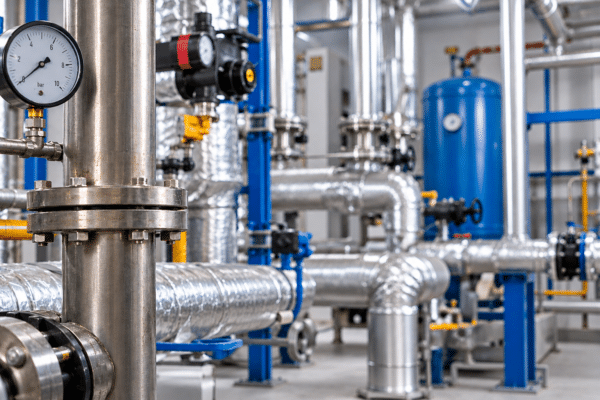
Closed heating and cooling water circuits often operate for long periods with the same volume of water. However, this does not mean that their chemical composition always remains stable or that they are free from problems.
The ingress of make-up water, the presence of dissolved oxygen, the build-up of corrosion products or the degradation of protective treatments can gradually alter conditions in the circuit. These changes can promote corrosion, scale, sludge formation and a loss of efficiency in heat exchangers.
For this reason, periodically analysing the water in closed circuits is an essential measure for anticipating incidents and keeping installations in optimum operating condition.
But which parameters should be analysed? How are the results interpreted? And what do they tell us about the actual condition of an installation?
Below, we review the main indicators worth monitoring and their importance in the maintenance of hydraulic systems.
Why is it important to analyse the water in a closed circuit?
Closed hydraulic systems are designed to limit the water’s contact with the outside and reduce make-up requirements. Even so, oxygen ingress, water losses, inputs of mineral salts or build-ups of residues originating from the installation itself can still occur.
Over time, these factors can alter the physico-chemical balance of the water and affect the materials that make up the circuit: steel, copper, aluminium, brass and other metal components.
The most common problems include:
- Internal corrosion: progressive deterioration of metal surfaces due to electrochemical reactions.
- Mineral scale: deposits of salts, particularly calcium and magnesium, which can impair heat transfer.
- Sludge formation: build-up of metal oxides, particles and other residues that can clog filters, valves and heat exchangers.
- Microbiological contamination: growth of microorganisms and biofilms under certain operating conditions.
- Loss of energy efficiency: reduced heat exchange capacity and increased maintenance requirements.
A water analysis makes it possible to detect changes before they result in breakdowns or significant losses in performance.
1. pH: the indicator of acid-base balance
pH is one of the fundamental parameters in the chemical control of water. It indicates whether the water is acidic, neutral or alkaline and can directly influence the rate and type of corrosion processes that develop in the circuit.
A deviation of pH from the recommended range can lead to various problems:
- pH too low: can increase general corrosion and promote the dissolution of certain metals and protective films.
- pH too high: can cause incompatibilities with certain materials, promote mineral precipitation or trigger localised corrosion under specific conditions.
There is no single pH value that is valid for all installations. The appropriate range depends on the metallurgical make-up of the circuit, the operating temperature and the treatment programme applied. For example, circuits containing aluminium components may require specific limits on excessively alkaline treatments.
This is why correctly interpreting pH means knowing both the materials in the installation and the characteristics of the chemical product used.
2. Electrical conductivity: a reference for dissolved salts
Electrical conductivity measures the water’s ability to conduct an electric current. It is related to the concentration of dissolved ions, such as chlorides, sulphates, bicarbonates, calcium, magnesium and other compounds present in the water.
It is usually expressed in microsiemens per centimetre (µS/cm) and is a useful indicator for detecting changes in water composition.
High conductivity may be linked to:
- A significant concentration of dissolved salts.
- Frequent additions of make-up water.
- Contamination of the circuit by other water streams.
- Build-up of certain chemical compounds.
However, high conductivity does not necessarily mean that the water is in poor condition. Some inhibitor treatments contain ionic substances that alter this parameter. It should therefore be interpreted taking into account the product used and the installation’s reference values.
It is also important to compare the results with previous analyses. A significant change may signal a disturbance in the circuit’s chemical balance.
3. Hardness: preventing mineral deposits
Water hardness is mainly related to the concentration of calcium and magnesium salts.
These minerals can precipitate and form deposits of calcium carbonate and other salts when the temperature, pH and composition of the water change.
In heating and air-conditioning installations, scale can build up on heat exchange surfaces, reducing their ability to transfer energy.
Its consequences include:
- Lower heat exchanger performance.
- Increased thermal resistance.
- Partial blockage of pipes and components.
- A greater need for cleaning and maintenance work.
It is worth distinguishing between the hardness of the fill water and that of the water circulating in the circuit. The former makes it possible to assess the potential risk of introducing mineral salts into the installation. The latter helps to establish the actual condition of the water, although the treatments applied may alter its composition.
For this reason, monitoring hardness is particularly relevant when filling or topping up the system with water.
4. Alkalinity: the capacity to stabilise pH
Although it is often confused with pH, alkalinity is a different parameter.
Whereas pH indicates how acidic or alkaline the water is at a given moment, alkalinity measures its capacity to neutralise acids. In natural waters it is usually related mainly to the presence of bicarbonates and carbonates.
Its importance lies in the fact that it contributes to the chemical stability of the water and governs certain mineral equilibria.
High alkalinity can promote the formation of calcium carbonate deposits if the right conditions of temperature and mineral concentration coincide. On the other hand, an insufficient alkaline reserve can make pH more susceptible to fluctuations.
In chemically treated circuits, alkalinity should also be interpreted in light of the treatment components, as some products contain buffering substances that alter this parameter.
5. Chlorides and sulphates: indicators of potential corrosion risks
Chlorides and sulphates are anions that may be present in the fill water or introduced through external inputs.
Monitoring them is important because certain concentrations can promote localised corrosion, particularly with susceptible temperature and pH conditions and materials.
Chlorides, in particular, can increase the risk of pitting corrosion (pitting) in certain metals, such as stainless steels, when combined with unfavourable conditions.
Sulphates can also influence corrosion processes and, in certain circumstances, take part in microbiological processes associated with material degradation.
These results should be interpreted according to the system’s metallurgy and its manufacturers’ recommendations. Knowing the concentration of these ions in isolation is not enough: the other chemical parameters must also be assessed.
6. Iron and copper: possible signs of internal corrosion
The presence of dissolved metals or metal particles in the water can provide information on the condition of the installation’s components.
The elements worth monitoring include:
- Iron: may originate from the corrosion of pipes, radiators, tanks and other components made of steel or iron.
- Copper: may indicate corrosion or dissolution processes in pipes, heat exchangers and fittings made of copper or its alloys.
A high concentration or an increase compared with previous analyses may warrant a more detailed investigation.
However, these results should be interpreted with caution. Iron can be found both in dissolved form and as suspended particles and oxides. This is why, when sludge or magnetite is suspected, it may be necessary to supplement the chemical analysis with an inspection of filters, dirt separators and accumulation points.
7. Corrosion inhibitors: checking that the treatment is still effective
Corrosion inhibitors are chemical substances that help protect metal surfaces through different mechanisms, such as forming protective films or modifying the electrochemical conditions of the water.
Their role is particularly important in circuits with a variety of metallic materials and demanding operating conditions.
However, adding an inhibitor during commissioning does not guarantee permanent protection. It is necessary to check that its concentration remains within the values recommended by the manufacturer.
An insufficient concentration can reduce the effectiveness of the treatment and leave certain surfaces exposed to corrosion. Conversely, overdosing should not be regarded as a guarantee of greater protection either, as it can upset the chemical balance or create incompatibilities.
Where appropriate, the analysis should include determining the residual level of the specific inhibitor used. Not all treatment programmes use the same compounds, nor are they monitored using the same analytical methods.
8. Dissolved oxygen and microbiological contamination
Dissolved oxygen is one of the factors that can promote corrosion in closed circuits. Although these installations limit contact with air, oxygen can enter through make-up water, leaks, pressurisation problems or components that do not provide an adequate barrier to its diffusion.
Its presence facilitates metal oxidation reactions and can contribute to the formation of oxides and sludge.
Possible microbiological activity should also be considered. Under certain conditions, microorganisms can form biofilms on the internal surfaces of pipes and heat exchangers.
These build-ups can promote microbiologically influenced corrosion (MIC), as well as contributing to the formation of deposits and blockages.
When there are signs of biological contamination, it may be necessary to carry out specific microbiological analyses and consider an appropriate treatment. Measuring pH or conductivity alone cannot confirm or rule out the presence of microorganisms.
How often should the water in a closed circuit be analysed?
The frequency of analysis depends on the characteristics of the installation, its volume, the materials, the operating conditions and the chemical treatment programme.
As a general rule, it is advisable to carry out checks at the following times:
- During commissioning: to establish the initial characteristics of the water and verify that filling and treatment have been carried out correctly.
- After cleaning or descaling: to check that the circuit has been left in suitable condition and that the parameters are within the expected values.
- After a significant addition of make-up water: as it can alter the salt concentration, pH and inhibitor residual.
- During routine maintenance: to detect trends and check that the treatment remains effective.
- When anomalies appear: such as hydraulic noise, changes in colour, blockages, loss of performance or build-up of residues in filters.
It is also advisable to keep a record of results over time. Comparing analyses carried out at different times makes it possible to identify trends that could go unnoticed if each measurement is examined in isolation.
What should you do when the analysis results are not right?
Detecting a deviation is only the first step. Before applying any chemical product, it is necessary to identify its cause and assess the characteristics of the installation.
For example, a pH outside the recommended range may require a specific correction, but it may also be linked to degradation of the treatment or the ingress of contaminants. Likewise, a high iron concentration may indicate active corrosion or the presence of deposits accumulated in the circuit.
An appropriate maintenance programme may include various actions:
- Circuit cleaning: to remove sludge, oxides and residues that impede circulation and heat exchange.
- Descaling: when mineral deposits are adhering to internal surfaces.
- pH correction: if the results indicate that the chemical balance of the water needs to be restored.
- Corrosion protection: by means of an inhibitor compatible with the materials and operating conditions.
- Microbiological control: when microbial proliferation is detected or suspected.
The choice of products and doses should be based on the diagnosis, the manufacturer’s instructions and compatibility with the materials present in the circuit. Correcting a single parameter in isolation without knowing the overall condition of the water is not recommended.
Aqua Line by CH Química: solutions for the treatment and maintenance of closed circuits
To keep hydraulic installations in good condition, CH Química offers Aqua Line, a range specialising in the chemical treatment of water for heating and air-conditioning (HVAC) systems.
Its catalogue includes solutions for different maintenance needs:
- AQ CLEAN and AQ CLEAN BIOKIL: cleaners for removing organic dirt and accumulated residues in closed circuits.
- AQ DESCAL and AQ DESCAL PLUS: products designed for cleaning and removing inorganic deposits.
- AQ PROTECT and AQ PROTECT BIOKIL: corrosion and scale inhibitor treatments; the BIOKIL version also provides biocidal action.
- AQ NEUTRAL: pH neutraliser for restoring chemical balance after certain cleaning processes.
- AQ BIOKIL: biocide for heating systems and closed water circuits.
The choice of each solution should reflect the actual conditions of the installation and the problem identified through analysis.
You can browse the full range at Aqua Line by CH Química.
Analysing water is an investment in preventive maintenance.
Analysing the water in closed circuits makes it possible to determine the chemical condition of the installation and detect changes that can promote corrosion, scale, sludge build-up or microbiological contamination.
Monitoring parameters such as pH, conductivity, hardness, alkalinity, chlorides, dissolved metals and inhibitor concentration helps you make informed decisions and adjust the chemical treatment when necessary.
The key lies not only in taking measurements, but in interpreting the results as a whole, understanding the characteristics of the circuit and acting preventively.
Regular monitoring and appropriate treatment help to maintain the efficiency of heating and air-conditioning systems, reduce corrective interventions and extend the service life of their components.